Skip to content
Services

From the studio · Renovations

Additions and Renovations on the Central Coast

Home extensions are a great way to get more value out of your existing home and allow it to grow with you.

Additions and Renovations on the Central Coast
Shea Cullen, Registered Architect at Good ArchitectShea CullenNSW Registered Architect 9748 · Updated 10 July 2026

A well designed addition is often better value than moving: you keep the street, the neighbours and the land you already own, and you spend the money on the house rather than on stamp duty and agents.

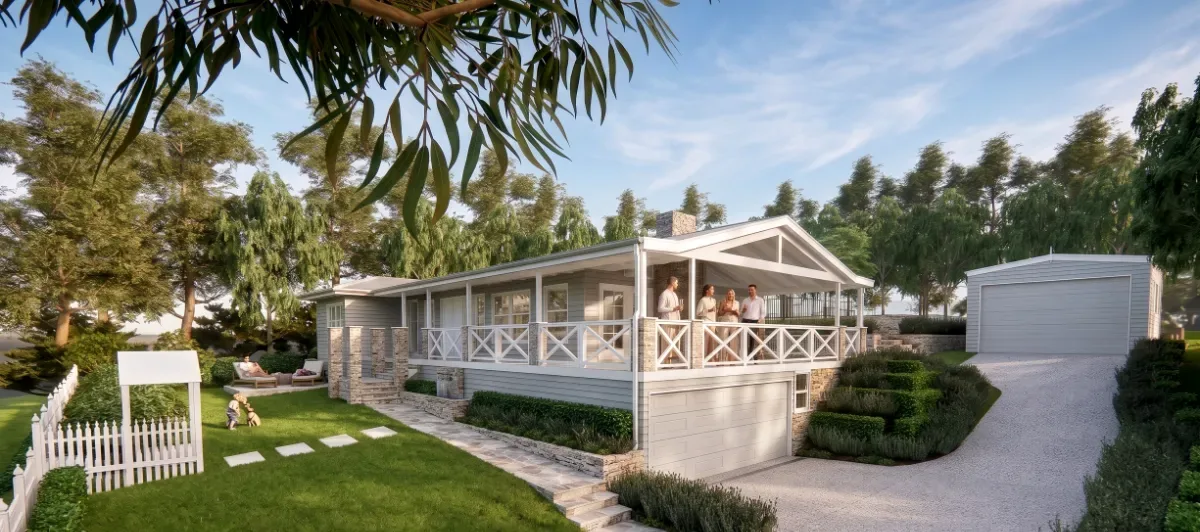
The trick is knowing which approval pathway your project falls under before you design it, because that decides the cost and the timeline. Some additions are exempt development, some are complying development, and some need a full development application. To see what considered additions look like on real homes, have a look at the Tormina kitchen renovation and our Northern Light extension at Erina. Then work through the checklist below.

Apply for an informal government information public access request through Central Coast Council. Under other documents request any previous plans, reports and DAs submitted on the site. This may give you the original plans and does not cost you anything.
Contact council to get them to give you a call back to discuss what you can do on your property. Use the council form for a call back from their town planners.
If your site is flood prone you will need to apply for a flood information certificate. If it is bushfire prone, you will need a bushfire report.
A survey shows where your boundaries are, the level of everything, and where your existing building is located on the site. Council usually requires this with the DA. It will also show existing services so you do not plan to build over a sewer main, which can be expensive.
If you are not building on top of existing foundations you may need a Geotech to enable the structural engineer to design footings. It matters most on a slope, so check how steep your site is first.
These will be for Development Approval and will include everything required on the DA Council Checklist. This generally includes plans, elevations, sections, shadow diagrams and a notification plan. The level of material detail is relatively simple. Council mainly want to know what external materials will be used. Smaller work can sometimes skip the DA entirely, see renovations: exempt, complying and council approval.
Send the Architectural Set to the stormwater engineer and they will provide stormwater drawings that look at the flow of water on the site and design the stormwater system so your house and garage stay dry.
BASIX consultants make sure there is enough insulation, windows are thick enough and there is enough rainwater storage to create a sustainable dwelling. BASIX is required by the NSW government for all additions over $50,000.
Council may request other consultants depending on the project and zoning, for example an arborist report if you are removing trees, or a bushfire report if you are in a bushfire zone.
After council approves your DA they will provide conditions of consent. Go through these to understand what you need to provide. Common conditions for additions include providing a concrete driveway and a pedestrian path in front of the house. Your structural engineer or a separate civil engineer will draw these up, and work in the road reserve also needs a Section 138 Roads Act approval.
Send the updated Architectural drawings to a structural engineer and get them to design the structure.
Provide a finer level of detail in the Architectural drawings, including wall types and concrete setout plans.
Work through the consent condition by condition. Common DA and CDC conditions covers the ones that catch people out.
Engage either council or a private certifier to approve the Construction Certificate.
Pick everything from tiles to paint. This means the builder can price it accurately and you will not get stuck with a builder's margin. Anything left as an allowance is a provisional sum or prime cost item, and you pay the difference plus margin if it lands higher.
Get your architect to do detailed design drawings of everything that is not a typical detail, and all wet areas. Anything you want to be brilliant, get drawn up. Standard details can be left out. Wet areas are worth the extra detail, see what to check before waterproofing is covered.
Look carefully at what each builder is including and excluding in their quote, then compare the totals against what it costs to build on the Central Coast.
Check the licence, the insurances and the history before you sign. How to select a builder sets out the checks, red flags when choosing a builder covers the warning signs, and questions to ask before signing a building contract covers the contract itself.

To see where this process can land, have a look at the kitchen renovation at Tormina and the Northern Light extension at Erina, two additions we designed on the Central Coast. You can also explore the Reeves Street extension at Narara, Blackstone at Niagara Park, The Wing at Lisarow, The Retreat at North Gosford, the Charmhaven sustainable retrofit and the Old Managers Cottage at Narara Ecovillage. For the bigger picture, from feasibility through contracts to construction, see before you build on the Central Coast.

Thinking about a
project?

Good Architect only takes a limited number of projects a year to keep the quality high.

Explore renovation design