 Shea CullenNSW Registered Architect 9748 · Updated 14 August 2026
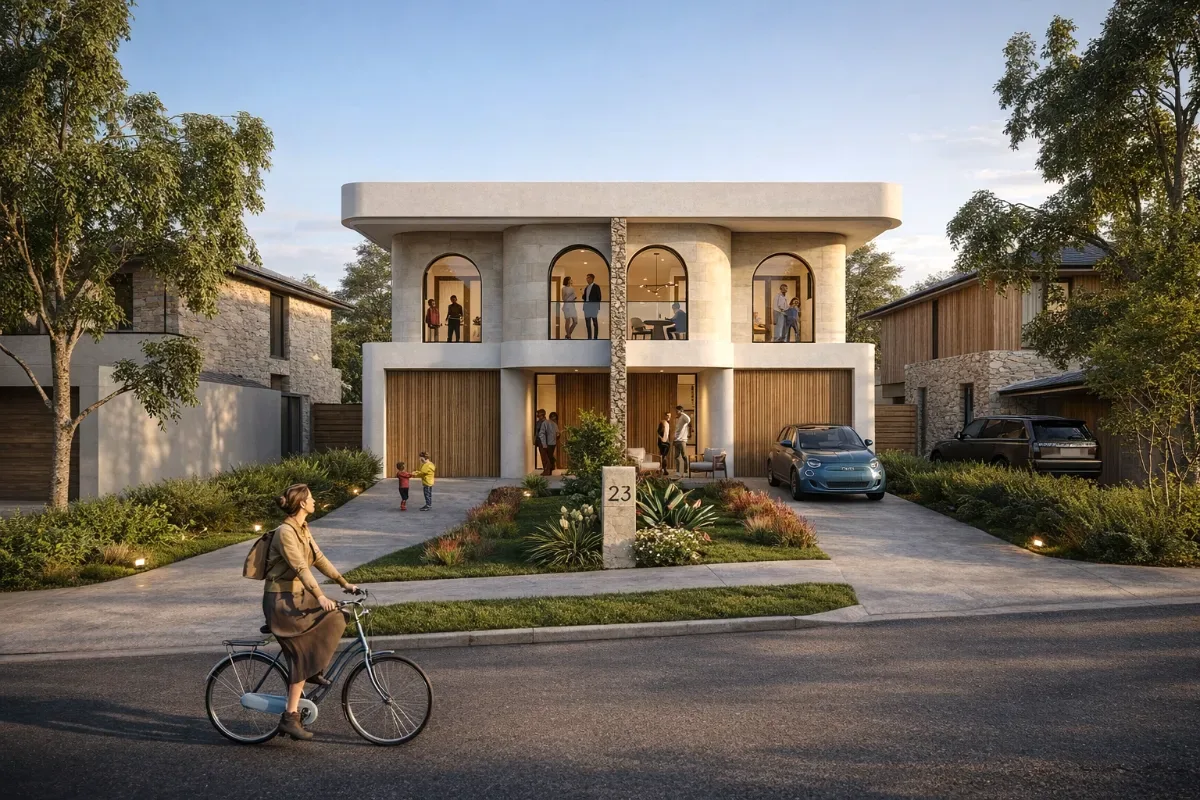
A dual occupancy is two homes on one lot. It is one of the most effective ways to make a single block work harder, whether you live in one and rent the other, keep family close, or build both to sell.
On the Central Coast the lot size is the first gate. Under Central Coast LEP clause 4.1B you need at least 550m² for an attached dual occupancy, two homes sharing a wall, and 700m² for a detached one, two separate homes on the same lot, in the R1, R2 and R3 zones. There is no minimum lot width on the development application pathway, though the complying development pathway sets one of 15 metres, or 12 metres with rear lane access. Whether you can later subdivide into two separately sellable titles is a further question, and often the answer is no, so decide early whether you are chasing two titles or two incomes.
Use the buildable envelope tool on this page to see what your block can take, then work through the checklist below to plan the approval.
You can see how this comes together on the Long Jetty duplex we designed as complying development, approved in a fraction of the usual DA timeframe without giving up design quality. See also the Wadalba duplex and The Outlook at Phegans Bay, two more dual occupancies we designed on the Central Coast. If you are still weighing the project up, start by checking what your site allows, and see before you build on the Central Coast for the whole journey from idea to keys.